Behavioral Health · Intake Accelerator
A smarter way to start care.
Intake Accelerator runs both sides of the front door: admission and clinical intake. Every inquiry answered across phone, web, and SMS, any hour, at any volume, and a comprehensive pre-visit evaluation completed before the first appointment. All of it lands in your EHR as structured records.
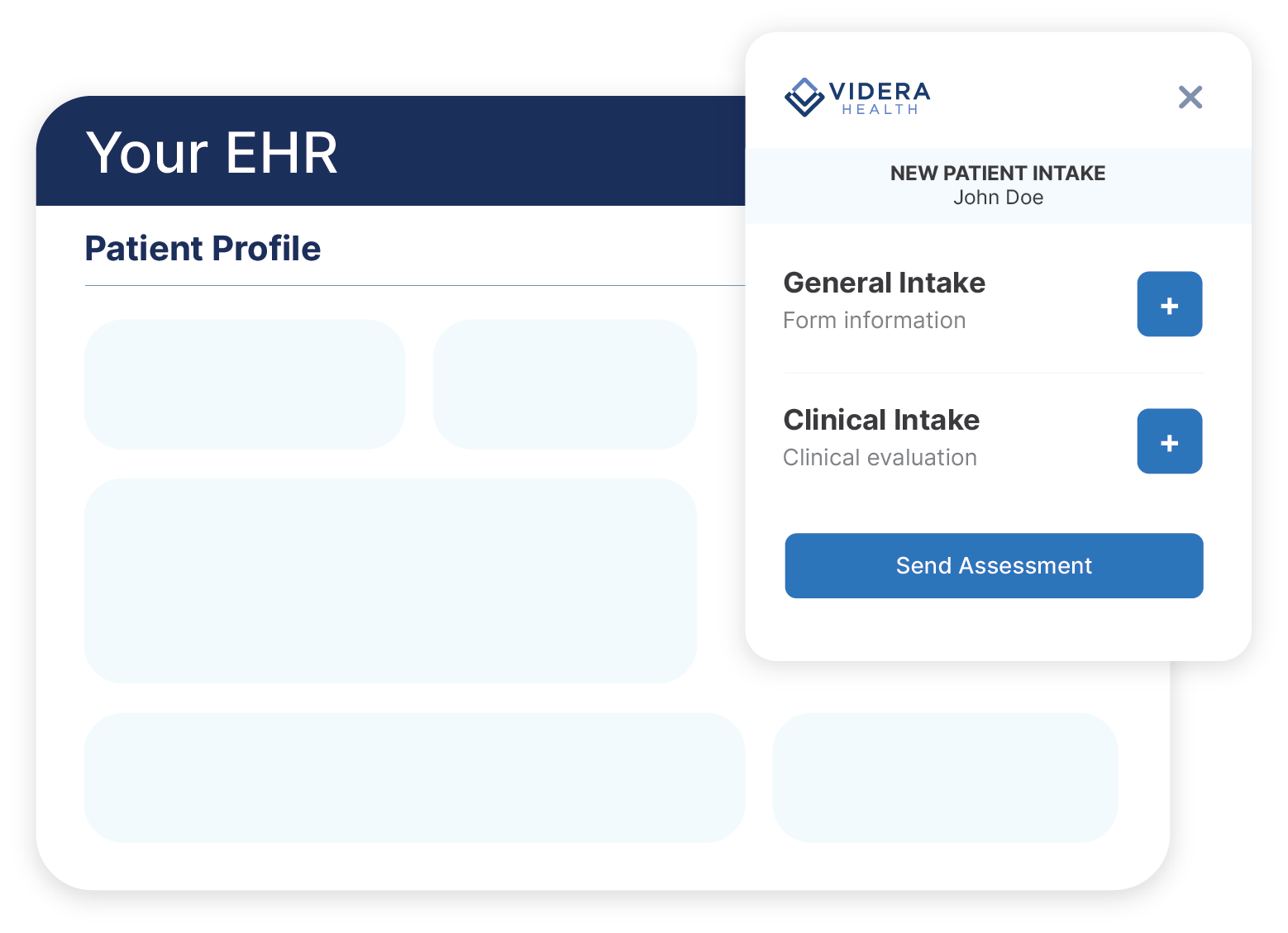
Admission and clinical intake are two different processes. One system runs both.
Admission is administrative: answer the inquiry, capture the details, get the person on the schedule. Clinical intake is clinical: understand what is actually happening and what level of care it calls for. Most tools do one and hand you the other.
Admission
Getting the person through the door
- 1
Every inquiry answered, any hour, any channel
- 2
Demographics, insurance, referral source, and consents captured
- 3
Validated on the spot and handed to scheduling
-
The person is in your system and on the schedule.
Clinical intake
Deciding what care they need
- 1
A comprehensive pre-visit evaluation goes to the patient
- 2
They complete it on their own time, at their own pace
- 3
Your instruments and level-of-care questions come back scored
-
The first appointment starts as a treatment conversation.
Turn on one side or both.
Most organizations turn on one side first, then add the other once the first one is running well.
From first contact to a chart your clinician can work from.
Step 1
Someone reaches out
A patient, parent, or referring provider calls, texts, or fills out the form.
Step 2
AI holds a real conversation
Not a phone tree. It answers questions and adapts to whoever called.
Step 3
Clinical evaluation, when they are ready
A pre-visit evaluation the patient completes on their own time.
Step 4
It lands in your EHR, structured
Organized, verified records instead of a voicemail and a callback list.
Step 5
A clinician reviews and signs off
Your team confirms what matters and keeps the clinical decision.
Adapts to whoever picked up the phone.
A referring provider needs something different from a frightened parent, who needs something different again from a prospective patient calling about themselves at midnight. The AI gathers background and context naturally rather than marching through a form.
Incoming call · answered on the first ring
11:07 PM · 4 min 12 sec
Videra
Thanks for calling. Are you calling about yourself, or for someone else?
Caller
Myself. I have been trying to stop drinking on my own and it is not going well.
Videra
That took courage to say. When was your last drink, and have you had withdrawal symptoms before?
Risk flag · escalated
Withdrawal history noted and flagged for clinician review at the top of the record.
Captured: demographics, insurance, referral source, presenting concern, substance use history, withdrawal risk, consents.
Illustrative transcript
Who it recognizes
The conversation changes shape based on who is speaking, what they need, and how much they already know about your programs.
Crisis safety built in
Intake is often the first place risk shows up. The conversation is risk-aware throughout, with appropriate escalation paths so an urgent situation does not sit in a queue until morning.
95%+
Data accuracy
Intake errors propagate into verification, scheduling, authorization, and eventually your claims. This is where that chain either starts clean or does not.
How it fits in your organization.
Commercial SUD
Catch the call at the moment of readiness
- →Insurance and referral detail captured up front for faster verification
- →Level-of-care and ASAM-relevant detail gathered before the first call back
- →Risk-aware conversation with escalation paths built in
CCBHC
Evidence for your access-to-care commitments
- →Same-day and next-day access supported without adding intake FTEs
- →Consistent capture across every access point and every DCO handoff
- →Consented, timestamped records for quality and reporting requirements
Large commercial BH
One front door across every site
- →Referring-provider conversations handled without a warm transfer
- →No-show risk reduced by qualifying and evaluating before scheduling
- →Intake staff redeployed from data entry to exceptions and outreach
Continue exploring Behavioral Health
Three other ways to work with Videra.
Built for regulated care.
Videra runs inside community mental health centers, SUD treatment networks, and multi-site behavioral health organizations. Access controls, audit trails, and clinician sign-off are foundational, not add-ons.
Let's keep talking
See what your front door looks like with nobody on hold.
Bring us your call volume, your channels, and your intake forms. We will show you exactly where Intake Accelerator would sit in your workflow and what your team would stop doing by hand.